
A&A GenPro Blog
What's the Difference Between Gasoline and Natural Gas Generators?
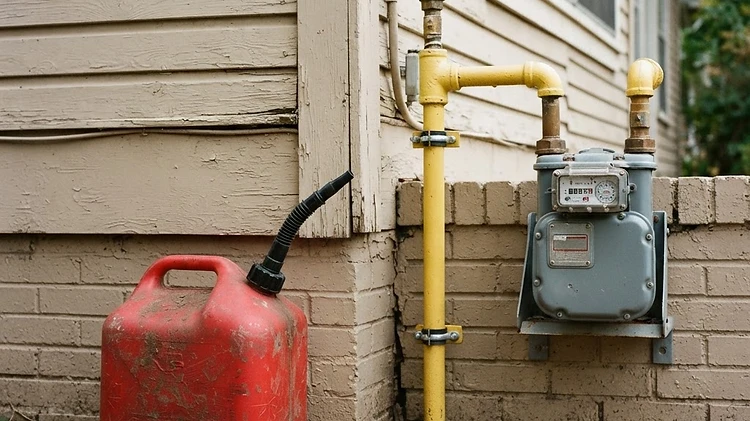
Is your home prepared to weather a power outage? According to NPR, home generator sales are on the rise as extreme weather, wildfires, and mass outages drive homeowners to invest in standby power. The next step is choosing the right gas generator. Let us look at the similarities, differences, and advantages of gasoline-powered versus natural-gas-powered generators.
What is the difference between gasoline and natural gas?
Gasoline and natural gas are both used to power generators, but they are not the same fuel. Gasoline is a liquid fuel made from crude oil, a mix of hydrocarbons, oxygen, sulfur, and nitrogen. The hydrocarbons in gasoline are heavier than those in natural gas, whose primary chemical is methane, an odorless and colorless gas. In physical state, gasoline is a liquid while natural gas remains a gas. Gasoline typically powers vehicles while natural gas regularly powers major home appliances like HVAC systems and backup generators.
What is natural gas and how is it made?
Natural gas is a naturally formed, methane-based gas that is colorless and odorless and also contains water vapor and carbon dioxide. According to the Department of Energy, natural gas accounts for about 30% of all energy consumed in the United States. Like other fossil fuels, it forms over millions of years through heat and pressure between rocks, and is extracted through sandstone drilling and shale extraction.
How do natural gas generators work?
Natural gas is a preferred source for home backup generators because it is a cleaner-burning fuel. A natural gas generator requires a fuel intake mechanism, a natural gas fuel injection process, an ignition device, compression, and power generation. Air is drawn into the combustion chamber; natural gas is injected and mixed with the air; the mixture is compressed to raise pressure and temperature; the spark plug ignites it; the controlled explosion pushes the piston, turning the crankshaft, which spins the rotor to create electrical current.
How to choose a gas generator
A&A GenPro carries the following gas-powered generators: Generac, Cummins, Briggs & Stratton, and Kohler. For diesel backup, Cummins is a recognized, reputable choice popular with commercial owners. For home backup, consider a Kohler natural-gas unit, known for high-quality voltage regulation that protects your smart appliances, with reliable performance and remote monitoring.
Discover which size generator you need before settling on a brand. Calculate the total wattage your home requires, including the highest starting watts. A professional is helpful here, both to size and properly install the unit. Consider noise levels too; Cummins offers quieter options, and A&A GenPro carries plenty of residential generators with lower noise levels.
Tips for maintaining a gas generator
- Regularly check fuel and oil levels.
- Clean spark plugs, air filters, and crankcase breathers.
- Check coolant levels for proper condensation.
- Run routine load bank tests to confirm the unit can handle full power.
- Check and replace the battery if the generator is overworking.
- Run the generator periodically even when not in use.
Investing in a gas generator is a wise decision; you never know when an outage or storm will hit. A&A GenPro's founders and experts are committed to providing and installing the best power generators for the Houston community. Call (713) 715-6618 or request a free quote to start your installation.